Some journeys do not begin with the excitement of exploration, but with a very gentle wish: to slow down. To slow down and breathe more deeply amid mountains and forests; to slow down and listen to oneself after the rush of everyday life. Yen Tu is a place that offers exactly that feeling — not noisy, not hurried, but filled with towering mountains, green forests, and a profound sense of stillness.
Set between the sacred space of Buddhism and the grandeur of nature, every step taken on Yen Tu is more than a sightseeing trip. It is a journey toward inner peace, a reconnection with long-standing cultural values of the Vietnamese people, and a quiet dialogue with one’s own inner self. Yen Tu is not simply a destination; it is a place to feel, to pause, and to remember long after you have left.

Where is Yen Tu and why is it famous?
Yen Tu is a mountain range located in Quang Ninh Province, mainly within Uong Bi City and Dong Trieu Town, rising to about 1,068 meters above sea level. Beyond its majestic landscape, it is one of the most important historical, cultural, and spiritual complexes in northern Vietnam.
Yen Tu is regarded as the cradle of Truc Lam Zen Buddhism in Vietnam. In the 13th century, after abdicating the throne, King Tran Nhan Tong ascended Yen Tu to practice Buddhism and founded a uniquely Vietnamese Zen school that emphasizes engagement with life, mindfulness, and harmony with the world. Since then, Yen Tu has become a sacred pilgrimage site, where generations of Vietnamese people come to worship, meditate, and find moments of calm amid the fast pace of modern life.

Must-Visit Attractions in Yen Tu
The Yen Tu scenic complex stretches along the mountain slopes, connected by a network of temples, hermitages, stupas, and pristine forests. For first-time visitors, the sites below are considered the “backbone” of the journey—rich in spiritual value and outstanding natural scenery.
Hoa Yen Pagoda – The Heart of Yen Tu
Hoa Yen Pagoda sits at an elevation of about 535 meters and is the largest, most important stop on the ascent. Formerly known as Van Yen Pagoda, it was later renamed Hoa Yen, meaning “where flowers bloom among clouds.”
This was where King Tran Nhan Tong taught the Dharma, gave sermons, and practiced Buddhism for many years. The pagoda grounds are spacious and airy: the front courtyard opens to a valley of clouds and mountains, while the back rests against an ancient forest. In spring, the area is often veiled in early-morning mist, creating a deeply tranquil and sacred atmosphere.
For many visitors, Hoa Yen is not just a sightseeing stop but a place to rest, slow down, and gather calm before continuing the journey to higher elevations.

Mot Mai Pagoda – A Unique Architectural Gem Amid the Mountains
Mot Mai Pagoda clings to a rocky cliff, true to its name: one half is set inside a natural cave, while the other opens directly to the surrounding landscape. This rare blend of stone and open air creates a distinctive character that makes the pagoda a favorite stop along the journey.
From the pagoda, visitors can gaze out over lush bamboo and pine forests, listen to the wind moving through the treetops, and hear birds echoing through the mountains. The atmosphere here is quiet and unadorned—ideal for resting, taking photos, and fully absorbing the natural beauty of Yen Tu.

Dong Pagoda – The Sacred Peak of the Journey
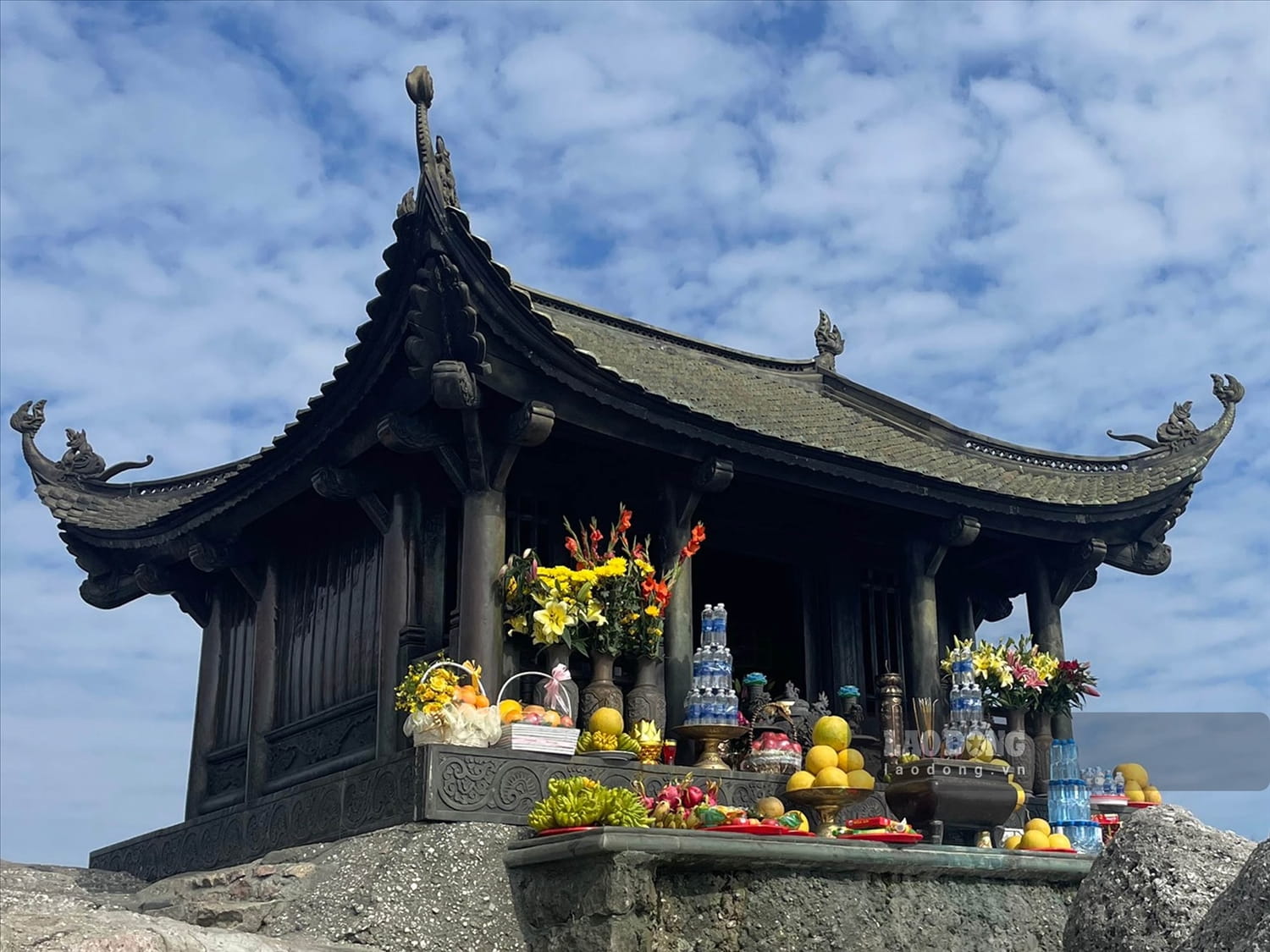
Dong Pagoda stands at the highest point of Yen Tu, at an elevation of nearly 1,068 meters, and is known as the largest bronze pagoda in Vietnam. Though modest in size, the pagoda is solid and dignified, rising above the clouds and symbolizing fulfillment and enlightenment in Buddhism.
Reaching Dong Pagoda requires determination. Visitors must pass a long stretch of steep stone steps, especially challenging near the summit. Yet the effort is rewarded the moment you arrive—standing on the mountaintop, watching clouds drift below your feet, with open space stretching in all directions, creates a powerful and unforgettable feeling.
For many travelers, touching Dong Pagoda is not simply the end of a hike. It marks a meaningful spiritual milestone—a place to offer wishes, reflect inwardly, and find a deep sense of peace.

Yen Tu National Forest – The Green Lungs of the Heritage Site
Beyond its spiritual significance, Yen Tu is also home to a precious primary forest ecosystem, featuring many ancient trees that are hundreds of years old. Winding trails through bamboo groves, bamboo forests, and pine woods create a cool, refreshing atmosphere throughout the year.
The air here is fresh and clean, with high humidity that feels especially pleasant during summer. For nature lovers, walking through the Yen Tu forest is not just a way to get from one place to another, but a truly relaxing experience—one that helps both body and mind “recharge” after the fast pace of urban life.


Best Time to Visit Yen Tu & Major Festivals
Yen Tu is beautiful year-round, but each season offers a very different atmosphere. Choosing the right time will greatly shape your experience—whether lively or peaceful, festive or contemplative.
Spring – Yen Tu Festival Season (from the 1st to the 3rd lunar month)
Spring is the biggest festival season of the year at Yen Tu. The main festival usually begins on the 10th day of the first lunar month and lasts until the end of the third lunar month, attracting large numbers of Buddhists, pilgrims, and visitors from across the country.
During this time, Yen Tu has a very distinctive atmosphere:
- Streams of pilgrims making their way from the foot of the mountain to the summit
- Incense-offering rituals, worship ceremonies, and prayers for peace held in a solemn setting
- A fresh, vibrant early-year mood with many traditional spiritual and cultural activities

This period is especially suitable if you:
- Want to fully experience the traditional pilgrimage atmosphere
- Travel with family or elderly members to pray for peace and good health
- Do not mind crowds and enjoy a lively, festive environment
Note: Festival season can be extremely crowded, especially on weekends and full-moon days. If you prefer quiet moments, slow hiking, photography, and deeper contemplation, it is better to choose another time of the year.
Autumn – Early Winter (around September to December)
This period is considered by many nature lovers to be the most pleasant and beautiful time to explore Yen Tu.
Key characteristics of this season include:
- Cool, dry weather with little rain
- A quiet atmosphere with fewer visitors
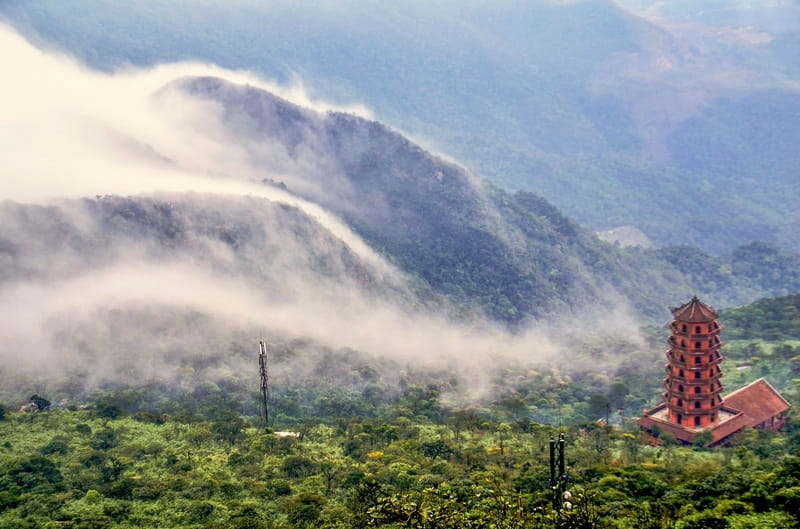
- Soft mist drifting around the mountain slopes, creating a very “Zen-like” feeling
- Lush bamboo and pine forests under gentle, golden sunlight
Autumn to early winter is especially suitable if you:
- Want to hike the entire trail or do a lot of walking
- Enjoy landscape photography and cloud hunting
- Are looking for a calm, gentle experience that truly reflects the spirit of Yen Tu
Many first-time visitors share that traveling outside the festival season allows them to feel more deeply the sacredness and inner peace of this holy mountain.
So, when is the best time to visit Yen Tu?
-
If you want to join pilgrimage activities, pray for peace, and experience the traditional festival atmosphere, visit in spring (from the first lunar month to the third lunar month).
-
If you prefer a quieter experience, gentle mountain climbing, beautiful photography, and mental relaxation, autumn to early winter is the better choice.
For those who have not traveled much before or are looking for a calm, easy, and comfortable trip, autumn to early winter is often the most ideal time to experience Yen Tu and truly feel the peaceful spirit of this sacred mountain.
How to Get to Yen Tu
Yen Tu is located in Uong Bi City, Quang Ninh Province, with convenient transportation and easy access—even for travelers with little travel experience.
From Hanoi to Yen Tu
- Distance: ~130 km
- Travel time: about 2.5–3 hours
By private car:
Hanoi → Hanoi–Hai Phong Expressway → Hai Phong–Ha Long Expressway → Uong Bi – Yen Tu interchange.
This route is straightforward, with smooth expressways and clear signage, suitable even for first-time long-distance drivers.
By coach / limousine:
You can take buses from My Dinh, Giap Bat, or Gia Lam bus stations, or choose limousine services with door-to-door pickup.

From Ha Long to Yen Tu
- Distance: 40–50 km
- Travel time: about 1–1.5 hours
You can travel by private car, taxi, contracted car, or rent a tourist vehicle if traveling in a group.
This route is ideal for combining Ha Long – Yen Tu in a 2–3 day itinerary: one side offers relaxing seaside scenery, while the other provides the calm, spiritual atmosphere of a sacred mountain—creating a perfect balance between leisure and contemplation.
Helpful Tips for First-Time Visitors
-
If you’re not used to long-distance travel or don’t feel confident driving far → choose a coach or limousine for a more comfortable, less tiring journey.
-
If you’re traveling with family, elderly members, or young children → a private car combined with the internal electric shuttle is a convenient and safe option.
-
If you’re combining Ha Long – Yen Tu in one trip → consider scheduling Yen Tu on the final day, so the journey ends gently, slowly, and with time to reflect.

What to Prepare Before Visiting Yen Tu
To make your mountain trip smooth and avoid getting exhausted halfway, you only need a few basic but very worthwhile items:
-
Comfortable, non-slip shoes: Choose sneakers or soft-soled shoes. The path has many stone steps and slopes; hard or slippery shoes can cause foot pain or slips.
-
Water & light snacks: Especially if you plan to walk, bring water, small snacks, candy, or energy bars to recharge along the way.
-
A light jacket: It’s cooler at higher elevations; early mornings and late afternoons often have wind and light mist.
-
Cash: Some small stalls, cloakrooms, or offering shops around the temples may not accept cards or digital payments.
Small note: Pack as light as possible. Fewer items—but the right ones—will help you walk comfortably, stay energized, and fully enjoy Yen Tu.

Why Visit Yen Tu at Least Once?
Yen Tu is not just a famous scenic site; it is a place where everyone can find a very personal reason to return.
For some, it is a deeply spiritual journey—a chance to step away from the rush of daily life, listen inwardly, and find peace and balance from within. For others, it is a nature escape, where layers of mountains, drifting clouds, and fresh air naturally ease the mind. Above all, Yen Tu is a living cultural experience of Vietnam, preserving centuries-old historical and spiritual values connected to Truc Lam Zen Buddhism and King Tran Nhan Tong.
Whether you come to Yen Tu to worship, to explore, or simply to find a quiet moment for yourself, this sacred mountain always offers moments profound enough to linger long in the hearts of those who pass through.