In the heart of the Vinh Loc plain (Thanh Hoa), the Ho Citadel rises proudly as a remarkable witness to Vietnamese history. This 600-year-old stone structure was recognized by UNESCO as a World Cultural Heritage Site in 2011, honoring its outstanding architectural, technical, and planning achievements far ahead of its time.
If you’re planning a trip that blends history, nature, and a peaceful retreat, the Ho Citadel is a destination you shouldn’t miss. Below is your A–Z travel handbook to help you explore this one-of-a-kind heritage site to the fullest.

Overview of the Ho Citadel
The Ho Citadel was built in 1397 under the reign of Hồ Quý Ly and became the capital of Đại Ngu in 1400. Although it existed for only a short period, the structure left behind an impressive legacy distinguished by its rare stone-construction techniques, far surpassing many architectural standards of the medieval era.
- Location: Vinh Tien and Vinh Long Communes, Vinh Loc District, Thanh Hoa Province.
- Core zone area: approximately 155.5 hectares.
- Buffer zone: over 5,078 hectares featuring scenic rural landscapes, mountains, rivers, and serene countryside views.

What Makes the Ho Citadel Truly Exceptional
A One-of-a-Kind Stone Structure in Vietnam
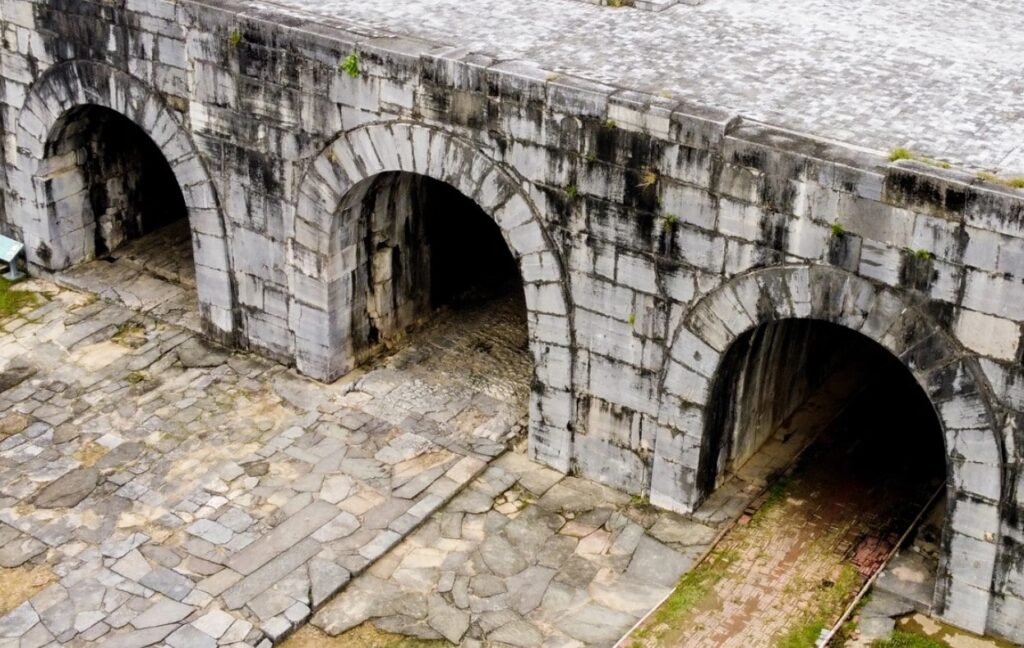
The Ho Citadel stands out for its unique architecture built almost entirely from stone—an extremely rare feature in the history of Vietnamese construction. About 20,000 m³ of limestone was used to build its walls and gates, with many individual blocks weighing tens of tons.
What impresses experts the most is the stone-joining technique:
- No mortar was used.
- The stone blocks fit together with near-perfect precision.
- Their surfaces were carefully polished and stacked into even, solid layers.
Such accuracy far exceeded the technological capabilities commonly known in the 14th century, making the Ho Citadel a remarkable engineering achievement of medieval Vietnam.

Construction Techniques – A Pinnacle of Medieval Engineering
To this day, researchers are still searching for answers to the question: “How did people in the 14th century transport and position stone blocks weighing tens of tons without machinery?”
Several theories have been proposed, including the use of:
- Wooden roller systems
- Long earthen ramps
- Large-scale human labor
- Lever techniques and other mechanical methods
However, none of these hypotheses have been definitively proven. The physical traces that remain suggest that the construction methods of the Ho dynasty were far more complex and advanced than what historical records describe.
One thing, however, is certain: After more than 600 years, the citadel walls still stand—many sections almost perfectly intact.
This extraordinary durability is undeniable evidence of the “engineering brilliance” achieved by the Ho dynasty.
Feng Shui Planning – An Intelligent Defensive Strategy
The location of the Ho Citadel was anything but accidental. From both feng shui principles and military strategy, this area was an ideal site for a capital city.
The citadel sits at the heart of a uniquely advantageous landscape:
- To the north, it leans against Don Son Mountain, acting as a natural protective “screen.”
- To the south, it opens toward wide plains—easy to manage, easy to cultivate, and suitable for expansion.
- On both sides, it is flanked by the Ma River and Buoi River, providing convenient transportation routes as well as natural defensive barriers.
- The four gates of the citadel align precisely along the East–West–South–North axis, reflecting meticulous and deliberate urban planning.
Thanks to this harmonious blend of natural geography and strategic vision, the Ho Citadel achieved both strong defensive capability and excellent feng shui positioning—a solid foundation for the emergence of a new capital.

Profound Historical and Cultural Value
The Ho Citadel was built in 1397 during the rule of Hồ Quý Ly—a turbulent period marked by major political and social changes.
This monumental structure carries several important meanings:
- A milestone of bold reforms:
The Hồ Dynasty introduced significant changes such as issuing paper currency, restructuring the administrative system, reforming education, and reorganizing the governmental apparatus. - A symbol of transition:
It represents the end of the Trần Dynasty and the beginning of the Hồ Dynasty, shortly before Vietnam entered the resistance period against the Ming invasion. - A rare and exceptional heritage:
The Ho Citadel is the only large-scale stone capital ever built in Vietnam and one of the very few of its kind in Southeast Asia.
Thanks to these unique and outstanding values, the Ho Citadel was recognized by UNESCO in 2011 as a World Cultural Heritage Site, honored for its “outstanding universal value as a cultural property.”

Outstanding Sites and Architectural Highlights of the Ho Citadel
The South Gate – The Majestic Symbol of the Stone Capital
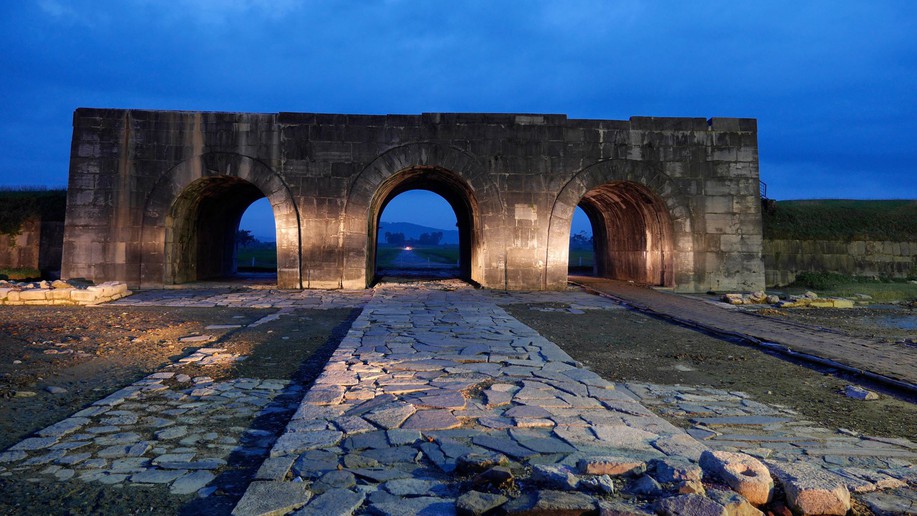
The South Gate is the most iconic structure and the most photogenic spot of the Ho Citadel. It is built entirely from massive limestone blocks, forming three solid archways—the central arch being the largest.
Key features include:
-
A height of over 10 meters
-
Stone blocks fitted tightly without mortar
-
Gracefully curved arches that remain remarkably strong
After more than six centuries, the South Gate still stands almost intact, serving as clear evidence of the advanced construction techniques of the Hồ Dynasty and the defining symbol of this heritage site.
The Massive Outer Walls – The Strength of Over 20,000 m³ of Stone
The Ho Citadel has a square layout, aligned precisely with the four cardinal directions: East, West, South, and North.
Several sections of the walls remain well preserved, characterized by:
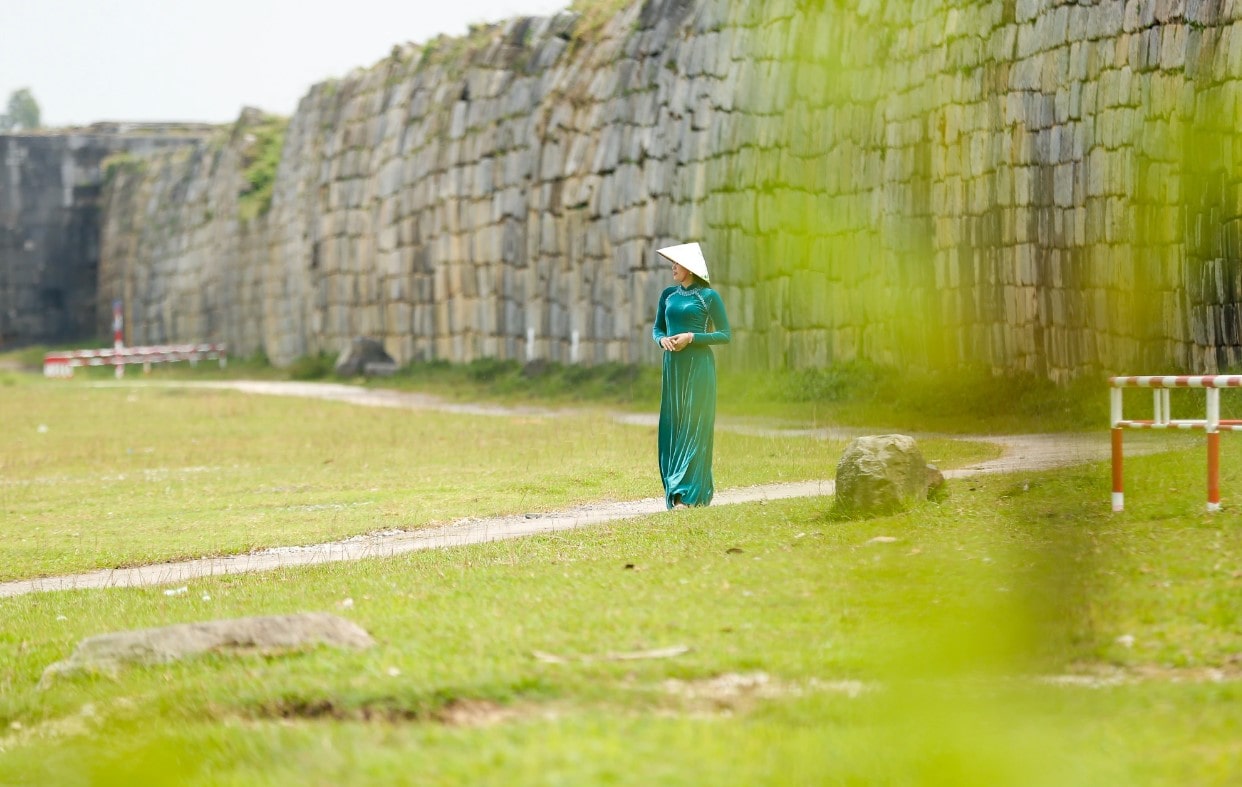
- Thickness of 5–6 meters
- Height ranging from 6–10 meters
- Large stone blocks neatly stacked on the exterior
- An interior reinforced with earth and smaller stones
These walls reflect not only strategic military planning but also the impressive organizational and engineering capabilities of the Hồ Dynasty.

The Nam Giao Altar – A National Ceremonial Space
The Nam Giao Altar is one of the largest and rarest surviving ritual platforms in Vietnam.
It was built for King Hồ Quý Ly to conduct ceremonies honoring Heaven and Earth, praying for peace and prosperity.
Notable characteristics include:
- A multi-tiered square structure
- A stone-reinforced foundation
- A wide, open ceremonial space symbolizing sacred authority
The Nam Giao Altar demonstrates that Tây Đô, the Ho Citadel’s capital, was not only a political center but also an important spiritual and ceremonial hub of the dynasty.

Underground Palace Ruins – Precious Archaeological Discoveries
Recent archaeological excavations have uncovered layers of history buried for more than 600 years.
Researchers have found:
- Foundations of the Thái Miếu (Ancestral Temple of the Hồ family)
- The Hoang Nguyen Hall, an important administrative structure
- Remains of palace floors, column bases, wooden architectural fragments, and roof tiles
These findings help reconstruct the layout of the former capital, which included palaces, administrative buildings, ceremonial spaces, and residential areas—indicating a well-planned urban center.

The Ho Citadel Museum – Where the Soul of the Heritage Is Preserved
Located near the main heritage site, the Ho Citadel Museum is an essential stop for anyone wanting to gain deeper insight into this historic period.
The museum preserves more than 1,000 artifacts, including:
- Ceramics, tiles, household items
- Architectural fragments and stone inscriptions
- Scale models of the stone citadel and daily life in the ancient capital
- Maps, historical documents, and archaeological reports
With thoughtfully arranged exhibits, the museum helps visitors visualize the historical context, architectural sophistication, and cultural life of the Hồ Dynasty.

Best Experiences at the Ho Citadel
Stroll Along the Ancient Walls – Slow Down and Breathe
One of the most enjoyable things to do at the Ho Citadel is simply walking around the ancient stone ramparts.
The entire area is spacious, peaceful, and shaded with greenery—an ideal escape from city noise.
As you walk, you’ll clearly feel:
- The breeze sweeping across the rice fields
- Birds calling from tree lines
- A gentle sense of “stepping away from the busy world”
It’s the perfect moment to relax, clear your mind, and recharge your energy.

Capture Timeless Photos at the South Gate
The South Gate is the most iconic check-in spot, thanks to its three towering stone arches that create a striking and ancient-looking backdrop.
A little photography tip:
- Morning: Soft angled sunlight highlights the textures of the stone.
- Late afternoon: Warm golden light adds a nostalgic, dreamy look.
Whether you’re shooting portraits or wide-angle landscape shots, the South Gate always delivers stunning frames. No wonder it’s a favorite among photographers and travelers alike.
Explore Vinh Loc Countryside – A Rural Painting Beside the Heritage Site
Surrounding the Ho Citadel are villages that preserve the rustic charm of traditional Vietnam:
- Bamboo hedges
- Vast rice fields stretching to the horizon
- Old brick paths
- Ancient wells and tiled-roof houses
The blend of mighty stone architecture and serene rural scenery feels like stepping into an old historical chapter.
This area is wonderful for walking, cycling, or taking cultural-style photo shoots.

Dive Into History – Discover the Engineering Genius of the Hồ Dynasty
The Ho Citadel is not only beautiful but also full of historical mysteries:
- Why did the Hồ Dynasty build a new capital?
- How were massive stone blocks, weighing tens of tons, transported and fitted together so precisely?
- Why does the architecture still fascinate international researchers today?
Interpretive boards are available throughout the site.
For a deeper understanding, you can hire a local guide—they often share fascinating behind-the-scenes stories that bring the heritage to life.

Experience Local Culture – Simple Yet Distinctive Flavors of Thanh Hóa
The people of Vinh Loc are warm and welcoming. Take some time to enjoy the local lifestyle and flavors:
- Tứ Trụ black sticky rice cake – the district’s signature specialty
- Peanut candy, sesame candy, bánh khảo – classic countryside treats
- Seasonal vegetables and fresh farm produce, especially local greens and root crops
If you visit during festival season, you might even witness traditional cultural activities unique to the historic land of Tây Đô.

How to Get to the Ho Citadel
From Hanoi
By Shuttle Bus – Convenient and Popular
Taking a shuttle bus is one of the most convenient and popular ways to reach the Ho Citadel. You can board buses at Giap Bat, Nuoc Ngam, or My Dinh stations, with routes heading directly to Thanh Hoa City or stopping near Vinh Loc District.
Once the bus arrives in Thanh Hoa City or a stop near Vinh Loc, simply take a short ride by taxi or motorbike taxi (xe ôm) to the heritage site (about 5–7 km).
The whole trip takes around 3 – 3.5 hours, perfect for travelers who want a quick, easy, and comfortable journey without having to drive themselves.
Self-Driving by Car or Motorbike – Flexible and Independent
Self-driving—either by car or motorbike—is an ideal choice if you prefer complete flexibility and want to enjoy the freedom of stopping wherever you like along the way.
From Hanoi, follow the Phap Van – Cau Gie Expressway, continue through Ninh Binh toward Thanh Hoa. When you reach the turn-off to Vinh Loc, drive another 20–25 km, and you’ll see the Ho Citadel emerging in the middle of wide green fields.
The total distance is about 150 km, with a travel time of 2.5 – 3 hours. The road is smooth and easy, making it perfect for a day trip or a scenic motorbike journey.
By Train – Safe and Comfortable
Traveling by train is safe, comfortable, and less affected by weather conditions. You can take SE trains or express trains from Hanoi to Thanh Hoa Railway Station.
From the station, continue by taxi, Grab, or a rented motorbike for about 35 km to reach the Ho Citadel. The route is straightforward, easy to navigate, and rarely congested.
Train travel usually takes 2.5 – 3 hours, ideal if you want to rest, relax, or get some work done during the trip.
From Thanh Hoa City
By Taxi or Grab – The Fastest Option
Taking a taxi or Grab is the quickest and most convenient way to reach the Ho Citadel from Thanh Hoa City.
The journey takes only 45 – 50 minutes, making it a great option for groups of 2–4 people who want a fast, hassle-free ride without transfers.
By Motorbike Rental – For Explorers
If you prefer full control of your schedule and enjoy the freedom of exploring, renting a motorbike is the perfect choice.
Thanh Hoa City has numerous rental shops offering daily motorbike rentals.
The road from the city center to Vinh Loc is straightforward and easy to ride. The scenery gradually shifts from urban streets to peaceful countryside fields, creating a pleasant and refreshing travel experience.
By Local Bus – Simple and Convenient
You can also take local buses running the route Thanh Hoa City → Vinh Loc.
These buses operate regularly throughout the day and are suitable for solo travelers, budget-conscious visitors, or anyone who wants to experience local daily life.
It’s a gentle, authentic, and enjoyable way to travel—especially if you’re not in a rush and want to observe the rhythm of the countryside.

Best Time to Visit the Ho Citadel
Spring (February – April)
- Lush green vegetation and fresh, crisp air.
- Gentle sunshine with pleasant temperatures, perfect for walking around the entire heritage complex.
- Photos come out vibrant with natural, flattering colors.
Autumn (September – November)
- A dreamy “combo” of blue skies, golden sunlight, and cool breezes.
- Morning and late-afternoon light beautifully highlights the massive blue-stone blocks of the Ho Citadel.
- This is also the season many travel bloggers choose for shooting videos and lookbooks.
Rice Harvest Season (May – June)
- The rice fields surrounding the citadel turn golden and glowing.
- Aerial or distant views become incredibly poetic, revealing the ancient stone fortress framed by fertile nature.
- Shooting from village paths or low-terraced fields facing the citadel walls creates stunning compositions.

Useful Tips for Visiting
- Wear comfortable sneakers or flat shoes — the stone pathways can be uneven in certain areas.
- Bring water, a hat, and a camera — the heritage site is large, perfect for long walks and photography.
- Show respect for the monument: avoid drawing, scratching, or damaging the stone walls to help preserve this valuable historical site.
- For a deeper understanding, consider hiring a local guide — there are many fascinating stories about the history and construction techniques behind the Ho Citadel.
Who Should Visit the Ho Citadel
- Visitors who love history, ancient architecture, and wish to explore an important transitional period in Vietnamese history.
- Travelers interested in ancient stone structures and medieval construction techniques.
- Backpackers and photographers looking for peaceful, nostalgic scenery set amid vast nature.
- International tourists wanting to admire a unique stone citadel — one of the rare remaining examples in East and Southeast Asia.
Conclusion
The Ho Citadel is far more than an old stone fortress. It is a living memory of the Vietnamese people, a testament to a turbulent historical era, and a showcase of the exceptional craftsmanship and forward-thinking engineering of the past.
A single day here is enough to feel the serenity, witness the timeless grandeur, and gain meaningful insights into Vietnam’s history. In today’s fast-paced world, pausing for a moment to touch stones that have stood for over 600 years is a powerful way to reconnect with the past — an experience truly worth having.
Source: Compiled
—————
Contact Us
- Address: Number 449 – Hong Ha street | Phuc Tan, Hoan Kiem District, Hanoi
- Hotline: +84 915 010 817
- Email: jameshanoimotorbikes@gmail.com
- Facebook: facebook.com/jameshanoimotorbikes