Gia Lai is not the kind of destination that makes people gasp at first glance. There are no turquoise beaches, no bustling city streets, no glamorous resorts. But once you set foot in Pleiku, ride along roads of red basalt soil, stand quietly before a volcano crater that has slept for thousands of years, or simply watch the sun slowly sink behind Bien Ho Lake, you’ll understand why so many people say: Gia Lai is a place you only miss after you’ve been there.
Traveling in Gia Lai is not for the hurried. This highland moves at its own gentle, unforced pace—calm, grounded, and real. History here doesn’t shout; it quietly reveals itself through old relics and sites. Nature remains largely untouched and wild. And local culture—from communal Rong houses and traditional festivals to the resonant sound of gongs—has been preserved by generations as something deeply woven into the soul of the land.
Gia Lai is for those who enjoy slowing down, who prefer feeling over “checking in.” For people who want to listen to the wind passing through pine hills, hear the echo of gongs in the great forest, and allow their hearts to settle after busy, noisy days.
Below are 15 representative destinations in Gia Lai, offering a fuller picture of a highland that is simple, quiet, yet rich in depth and emotion.

15 Representative Tourist Destinations in Gia Lai
Great Solidarity Square – The Heart of Pleiku
Located in the very center of Pleiku City, Great Solidarity Square is regarded as one of the largest and most meaningful public spaces in Gia Lai. It is not only a venue for important cultural events and festivals, but also a familiar gathering place in the everyday life of the highland city’s residents. The square is spacious and airy, surrounded by rows of green trees and major roads, creating an open and pleasant atmosphere.
The most striking feature of the square is the solemn statue of President Ho Chi Minh. Behind it stands a relief complex and a display of Central Highlands gongs, strongly reflecting the region’s indigenous cultural identity. This blend of historical significance and ethnic culture gives the space a sense of dignity while remaining warm and approachable.
In the early morning or late afternoon, the square comes alive with locals exercising, strolling, and children playing. Life here moves at an unhurried, quiet pace—yet lively enough for visitors to clearly feel the simple, everyday rhythm of Pleiku. Visiting Great Solidarity Square is not just about seeing a landmark; it is about touching the daily pulse of Gia Lai’s highland city.

Pleichuet Church – A Cultural and Architectural Fusion
Pleichuet Church makes a strong impression at first sight with its architecture inspired by the traditional rong house of the Central Highlands—tall, spacious, and solid. The building carries the traditional form of indigenous communal houses, harmoniously blended with Catholic church architecture, creating a space that feels both sacred and warmly approachable.
Stepping into the church grounds, visitors can clearly sense the rustic simplicity reflected in every detail. The high roof, large pillars, and open layout allow the structure to blend naturally with the surrounding highland landscape. It is also a place of religious practice for the Jrai community, vividly reflecting the cultural and spiritual life of the local people.
For travelers, Pleichuet Church is not merely an architectural attraction, but a place to better understand Gia Lai’s unique cultural intersection—where faith, tradition, and identity coexist in a natural and seamless way.

Bien Ho (T’Nưng Lake) – The Green Eye of the Mountain Town
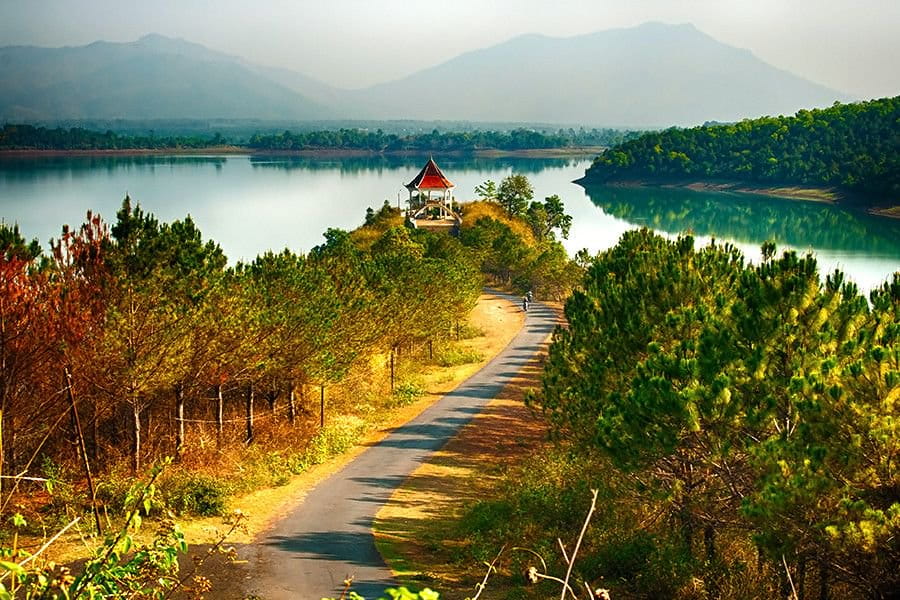
Bien Ho T’Nưng is one of the most iconic and well-known destinations in Gia Lai, almost impossible to leave out of any journey exploring the mountain town of Pleiku. This vast lake was formed from an ancient volcanic crater that ceased activity millions of years ago, giving it a beauty that is both majestic and deeply tranquil. The water is a deep, serene blue, smooth like a mirror, reflecting the highland sky and the surrounding forests, creating a scene that feels open, pure, and refreshing.
What draws visitors to Bien Ho is not lively activities, but its rare sense of stillness. The space here feels expansive, with gentle breezes carrying cool, fresh air, allowing travelers to feel relaxed from the very first steps. In the early morning, mist drifts softly across the lake, creating an ethereal atmosphere; by late afternoon, the setting sun paints the water in warm golden tones, evoking a feeling that is slow, quiet, and profoundly calming.
Bien Ho T’Nưng is an ideal place for walking, photography, breathing in the fresh air, and momentarily stepping away from the rush of daily life. More than just a famous attraction, it is a place where visitors can fully experience the peaceful, understated beauty that defines Gia Lai.

Chu Dang Ya Volcano – A Golden Season of Wild Sunflowers on the Highlands
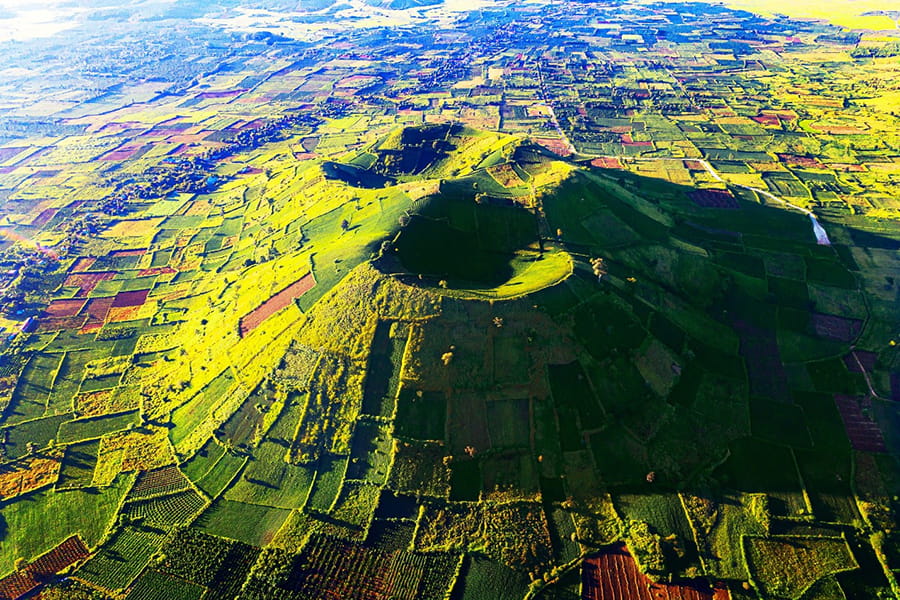
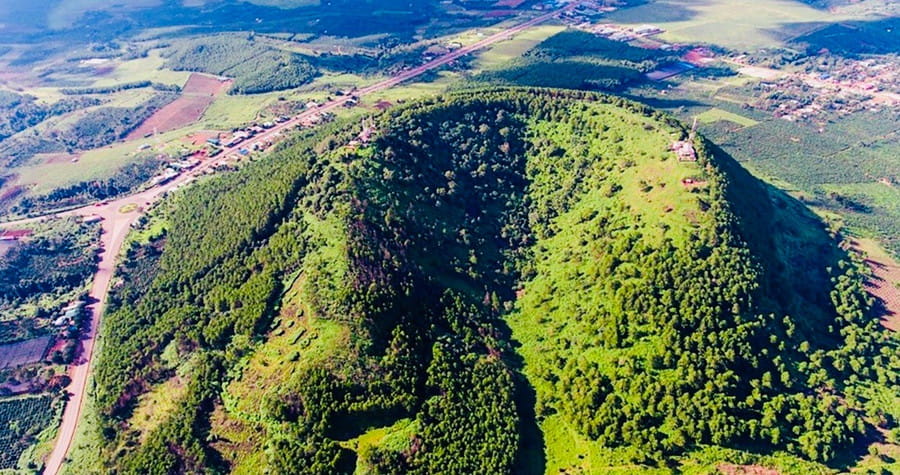
Chu Dang Ya is one of the most pristine and captivating volcanic mountains in the Central Highlands. Around November, when wild sunflowers burst into bloom, the entire slope is draped in a brilliant golden cloak, standing out vividly against the characteristic red basalt soil and the vast, clear blue highland sky.
The path leading up Chu Dang Ya is not too challenging, making it suitable for gentle hikes as well as landscape photography. From the top, fields, villages, and farmlands appear small and peaceful within the expansive surroundings, allowing visitors to clearly sense the harmony between nature and human life.
Beyond being a popular check-in spot, Chu Dang Ya offers a uniquely calming experience. Amid the sweeping highland winds and endless stretches of golden wild sunflowers, it becomes easy to slow down, feel lighter, and be deeply moved by the raw, unembellished beauty of Gia Lai.
Ho Troi (Sky Pit) – Untamed Beauty in the Forests of An Khe
Hidden deep within the forests of An Khe, Ho Troi is a destination for those who love raw nature and enjoy exploring places still largely untouched by human presence. What makes this site striking is its series of rapids and waterfalls nestled between two towering cliffs, where water cascades powerfully from above, bursting into white foam and creating a scene that is both majestic and slightly mysterious.
The surroundings of Ho Troi feel almost completely detached from the outside world. The sound of rushing water blending with forest winds, along with the cool, damp scent of rocks and vegetation, turns the journey into a true escape from urban life. It is an ideal spot for trekking enthusiasts, nature photographers, or anyone simply seeking a quiet place to recharge.
Access to Ho Troi is relatively challenging, with steep slopes and slippery rocks, especially during the rainy season. Yet it is precisely this difficulty that has helped preserve its rare, pristine character, making Ho Troi one of Gia Lai’s most captivating natural destinations.

Pleiku Prison – An Unforgettable Historical Site
Pleiku Prison is one of the city’s most significant historical landmarks, bearing witness to a brutal chapter in the nation’s struggle for independence. It once held many revolutionary fighters, who endured harsh living conditions and severe forms of torture. Through preserved prison cells, artifacts, and archival photographs, visitors can gain a vivid sense of the forced labor, hardship, and unyielding resilience of those who sacrificed themselves for the ideal of freedom.
The atmosphere of the prison is somber and heavy, naturally slowing each step and inviting visitors to lower their voices, observe more closely, and reflect more deeply. This is not a place to visit merely out of curiosity, but a space to feel, to remember, and to better appreciate the value of peace today.
A visit to Pleiku Prison offers more than historical insight into Gia Lai; it provides a moment to pause, look back into the past, and cultivate a deeper sense of gratitude for the present.

Bien Ho Tea Hills – Endless Green Shades of the Mountain City
Located not far from Bien Ho T’Nung, the Bien Ho Tea Hills are an ideal stop for those who love open green spaces and the tranquil atmosphere of the Central Highlands. Rolling tea-covered hills stretch endlessly along the slopes, reaching toward the horizon and forming a landscape that is unmistakably “Gia Lai” — rustic, airy, and quietly captivating.
The red basalt dirt road winding through the tea hills is a familiar check-in spot for many visitors. Simply slowing down as you pass by and taking a deep breath is enough to sense the gentle aroma of fresh tea leaves blending with the cool highland breeze.
The most beautiful time to visit is early in the morning, when a light mist still lingers on the young tea leaves and soft sunlight filters through the layers of green, making the entire scene feel pure and serene. Bien Ho Tea Hills are not loud or showy — just green enough, just peaceful enough to make you want to linger a little longer.

Minh Thanh Pagoda – A Tranquil Pause in the Heart of the Mountain City
Amid the gentle pace of life in Pleiku, Minh Thanh Pagoda stands out with its architecture inspired by Japanese Buddhism, offering a distinctly different atmosphere from the traditional pagodas commonly found in the Central Highlands. Curved roofs, solemn Buddha statues, and meticulously crafted details create a space that feels both dignified and deeply meditative.
The pagoda grounds are spacious and open, surrounded by greenery and water features that keep the air cool and refreshing throughout the day. The moment you step through the gate, the noise of the city seems to fade away, replaced by a sense of calm and unhurried stillness.
More than just a spiritual site, Minh Thanh Pagoda is a place where visitors come to relax their minds, take slow walks, and enjoy elevated views of the mountain city. It is an ideal stop to pause, breathe deeply, and restore inner balance during your journey through Gia Lai.

Hang En Waterfall (K50) – A White Silk Ribbon in the Heart of the Forest
Hang En Waterfall, also known as K50, is one of the most beautiful and pristine waterfalls in Gia Lai. Hidden deep within primary forest, the waterfall appears like a giant ribbon of white silk cascading from great height, standing out against the dense green backdrop of the mountains and jungle. The water flows wide and powerful, splashing into white foam and creating a scene that feels both majestic and mesmerizing.
Reaching Hang En Waterfall is not an easy journey. Visitors must trek through forest trails, cross streams, and climb steep slopes, requiring good stamina and a true spirit of adventure. Yet it is precisely this challenging journey that makes the experience so rewarding. Standing before the roaring waterfall, listening to the echo of rushing water in the quiet of the deep forest, all fatigue seems to melt away.
Hang En Waterfall is not for rushed trips. It is an ideal destination for those who love untouched nature, enjoy physical challenges, and want to truly encounter the wild, raw beauty of Gia Lai’s great forests.

Yaly Hydropower Lake – Where Humanity and Nature Exist in Harmony
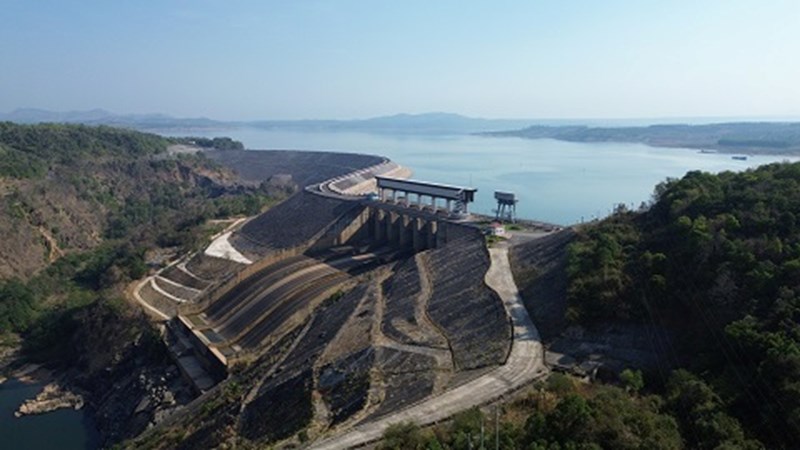
Yaly Hydropower Lake lies along the Sê San River and is one of the largest and most impressive hydropower projects in the Central Highlands. Beyond its economic and energy significance, the area attracts visitors with its vast, open landscape, where human ingenuity blends harmoniously with nature. The expansive lake features calm, emerald-green water, surrounded by layers of mountains and forests that are characteristic of Gia Lai’s highlands.
Standing atop the Yaly dam, visitors can gaze far into the distance and truly feel the immense scale and quietness of the space. Strong highland winds sweep across the lake’s surface, while the water stretches toward the horizon, creating a scene that feels both powerful and deeply peaceful. It is an ideal place to pause, take photographs, or simply admire nature in its unhurried, unspoiled state.
The most beautiful time to visit Yaly Lake is in the late afternoon, when the sunlight softens and the setting sun casts golden hues across the water and surrounding hills. In that moment, the landscape becomes gentle and contemplative, leaving a lasting impression on anyone who experiences it.
The Century-Old Pine Trees – A Road of Memories
The century-old pine trees are one of the most evocative images of Gia Lai. Tall, straight pines planted during the French colonial period now form a road filled with the quiet memories of the highlands. Their rough trunks and towering canopies create an atmosphere that feels both timeless and poetic.
When sunlight filters through the pine branches, shadows fall softly onto the red basalt road below, giving the scene a calm, almost romantic beauty. A gentle highland breeze carries the faint scent of pine resin, inviting visitors to slow down and simply take it all in.
Unassuming and free of crowds, the century-old pine road draws travelers with its sense of stillness and nostalgia. It is an ideal place for a leisurely walk, photography, or simply standing quietly and listening to the unique rhythm of life in Gia Lai.

Dak Doa Pink Grass Hill – The Dreamy Season of the Highlands
Around November each year, Dak Doa Pink Grass Hill enters its most beautiful season, when the landscape is gently covered in soft shades of pink and purple, stretching between deep green pine forests. Unlike vibrant flowers, the pink grass has a delicate, pure beauty, creating a scene that feels uniquely characteristic of the Gia Lai highlands.
In the early morning, when dew still clings to the tips of the grass, the hill shimmers as if draped in a thin layer of crystal. By late afternoon, the warm glow of sunset washes over the area, giving the pink hues a softer, more romantic tone. This is the perfect time for strolling, photography, or simply standing still and watching nature slowly change.
Dak Doa Pink Grass Hill is quiet and unhurried, especially if you arrive early. It’s an ideal destination for those who appreciate gentle beauty and want to experience a dreamy, slow-paced, and refreshingly different side of Gia Lai.

Kon Ka Kinh National Park – The Breath of the Great Forest
Kon Ka Kinh National Park is one of the most important remaining primary forests in Gia Lai and a representative example of the Central Highlands’ mountain forest ecosystem. With its vast area, diverse terrain, and rich vegetation, the park has retained an almost untouched, pristine character, largely free from mass tourism.
Stepping into Kon Ka Kinh, the first sensation is a deep sense of coolness and stillness spreading through the space. Towering forest canopies, small streams winding along the forest floor, and the sounds of birds and wind rustling through leaves create a rhythm that belongs uniquely to the great forest. Trekking here is not about noise or spectacle, but about experiencing, observing, and quietly listening to nature.
Kon Ka Kinh is especially suitable for nature lovers, eco-travel enthusiasts, and those seeking a true escape from urban life. More than just a sightseeing destination, it is a journey to connect with the forest, feel nature in its most original form, and rediscover balance between humans and the natural world.

Se San Fishing Village – A Riverside Corner in the Central Highlands
Amid the red basalt highlands, Se San fishing village appears as a strikingly different slice of Gia Lai. With no towering mountains or deep forests, this place carries the character of a riverside community, where floating houses, anchored boats, and daily life are closely tied to the gentle flow of the Se San River.
Life in the fishing village moves at a slow, unhurried pace. Early in the morning, the water lies calm, the soft sound of boat engines signals the start of a familiar working day. As afternoon fades, the village is bathed in golden sunlight, creating a peaceful scene that naturally invites visitors to linger.
Visiting Se San fishing village is not just about sightseeing. It is a chance to observe the simple working lives of local people and to feel a rare and fascinating harmony between highland landscapes and river life — a distinctive experience that is seldom found elsewhere in Gia Lai.

Explore Gia Lai by Motorbike with James Motorbikes
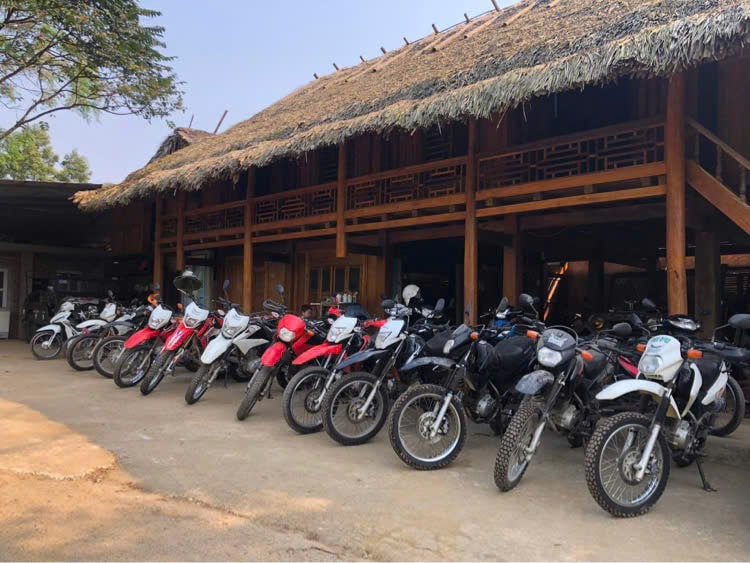
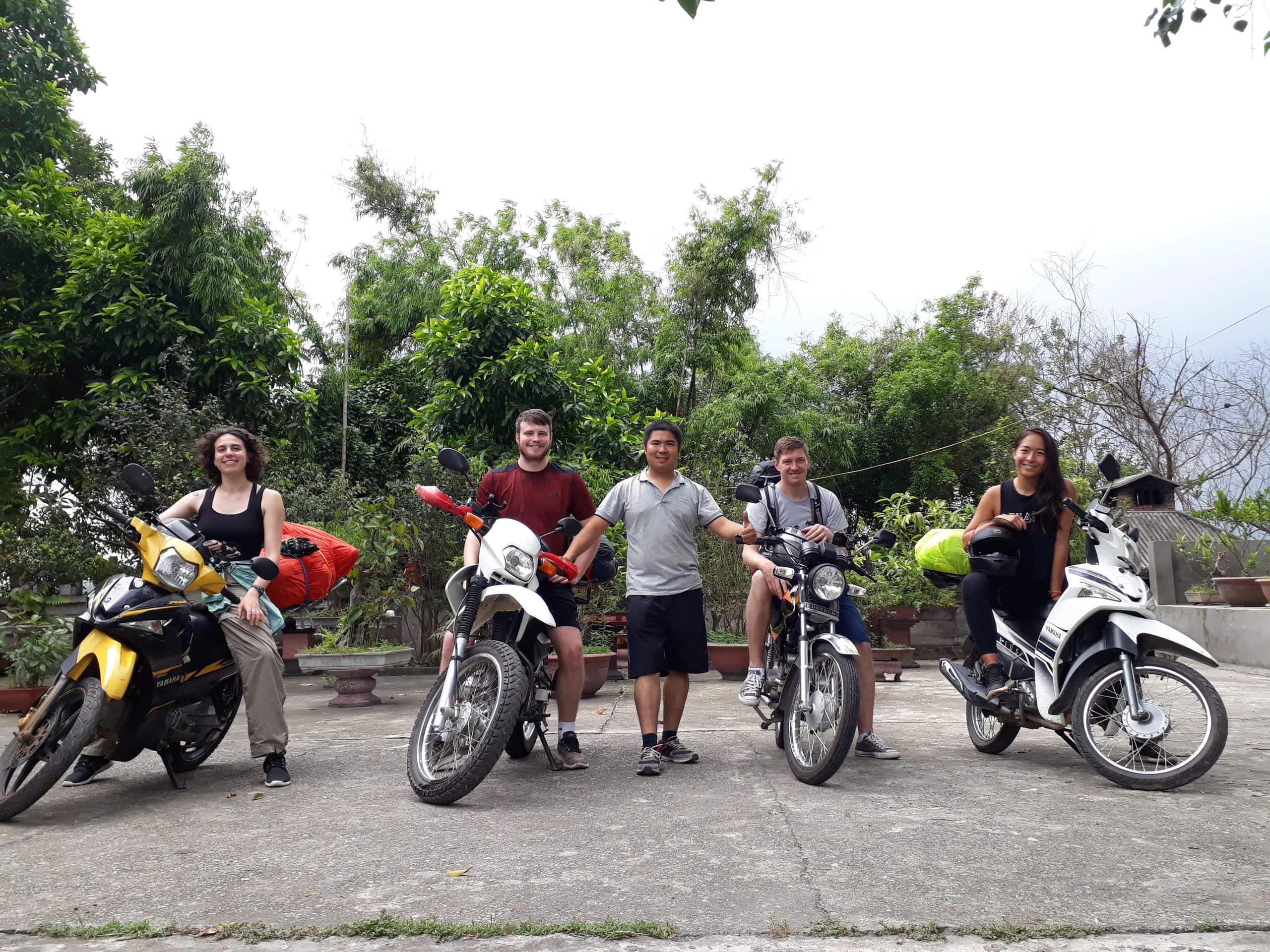
If you’re looking for a free, flexible, and truly immersive way to explore Gia Lai, renting a motorbike is one of the best choices — especially since attractions here are spread across hills, lakes, waterfalls, and pristine forests. And when it comes to motorbike rentals, James Motorbikes is a trusted name among travelers.
James Motorbikes offers a wide range of well-maintained bikes suitable for every type of journey:
- Manual bikes – durable and reliable for red basalt dirt roads
- Scooters – convenient for getting around Pleiku city
- Manual clutch bikes – ideal for mountain passes and light off-road routes
Why choose James Motorbikes?
✅ Reliable & high quality: All bikes are regularly serviced to ensure smooth performance on highland terrain.
✅ Simple rental process: No complicated paperwork — just an ID card or passport is enough.
✅ Friendly local support: Staff are happy to suggest routes that fit your schedule and interests.
✅ Total freedom: Stop wherever you like — a quiet tea hill, a hidden waterfall, or a sunset view at Biển Hồ — without the limitations of guided tours.
Helpful rental tips
🔹 Check the brakes, lights, and tires carefully before taking the bike.
🔹 Bring a helmet, a light jacket, and offline maps or GPS.
🔹 Follow traffic laws, especially on mountain roads and sharp curves.
With a motorbike from James Motorbikes, your Gia Lai journey becomes truly your own — free to ride, free to pause, and free to feel every quiet, authentic moment of the Central Highlands.
Must-Try Cuisine When Visiting Gia Lai
Gia Lai’s cuisine is not elaborate or flashy, but it is deeply satisfying — true to the spirit of the Central Highlands. Each dish reflects the cool climate, local ingredients, and the simple, grounded lifestyle of the highland people. If you visit Gia Lai, these are the flavors you should not miss.
- Gia Lai Dry Noodle Soup (Two-Bowl Pho)
Often considered Pleiku’s signature dish, this specialty is served in two bowls: one with dry rice noodles mixed with meat, fried shallots, and crispy pork fat, and another with a clear, lightly sweet broth. The noodles are not soaked in soup — they are mixed well and enjoyed slowly, allowing you to appreciate their chewy texture and balanced flavors. - Crab Paste Vermicelli (Bún Mắm Cua)
This dish can be challenging for first-timers due to its strong fermented crab aroma, but those who get used to it often become fans. The bowl combines vermicelli, pork skin, fish cake, and fresh herbs, delivering a rich, salty, and distinctive taste unique to Gia Lai.

- Grilled Chicken with Bamboo Rice
Free-range chicken is marinated with salt, chili, and lemongrass, then grilled over charcoal. It is served with fragrant bamboo rice cooked inside bamboo tubes. This dish is especially enjoyable in the cool, crisp air of the highlands. - Sun-Dried Beef with Ant Salt
Thin slices of beef are sun-dried, lightly grilled, and dipped in ant salt — a bold blend of sour, salty, and spicy flavors. This is a truly unique Gia Lai specialty that leaves a lasting impression. - Wild Leaf Hot Pot
A communal hot pot made with dozens of different forest leaves, offering a complex mix of bitter, sweet, and mildly spicy notes. More than just a meal, it is a cultural experience rooted in indigenous traditions. - Pleiku Coffee
A must-have experience. Gia Lai coffee is strong, aromatic, and best enjoyed slowly. A quiet morning in Pleiku with a hot cup of coffee is a simple yet unforgettable moment.
Gia Lai’s cuisine does not need much introduction. Eat it once, in the right place and atmosphere, and you will understand why people say: you visit Gia Lai to remember — and the memories last a long time.

Travel Tips & Notes
Traveling in Gia Lai is generally easy and pleasant, but to make your trip safer and more enjoyable, it’s worth keeping a few practical tips in mind. Nothing fancy here — just things you’ll be glad you knew once you’re on the road.
- Choose the right time to visit
The best time to explore Gia Lai is from November to April. This is the dry season, with cool air and gentle sunshine, making it ideal for sightseeing and traveling. From July to September, heavy rain can make forest trails slippery and motorbike trips more challenging, especially for long distances. - Dress for the highlands
Days can be warm, but early mornings and evenings — especially in Pleiku — can be quite chilly. Bring a light jacket, and wear sneakers or trekking shoes if you plan to visit forests, waterfalls, or volcanic areas. - Be cautious on mountain roads and red dirt tracks
Gia Lai has many mountain passes and basalt roads that can become slippery after rain. If you’re riding a motorbike, go slowly, stay alert, and avoid traveling at night in remote areas.
- Respect local culture
When visiting ethnic minority villages, ask for permission before taking photos, dress modestly, and keep a friendly attitude. The people of Gia Lai are warm and sincere — a little respect goes a long way. - Carry some cash
In remote areas, small eateries and villages often don’t accept electronic payments. Having cash on hand is very helpful. - Prepare well for trekking
Places like K50 Waterfall or Kon Ka Kinh National Park require good physical condition and, ideally, a guide. Don’t underestimate the terrain — the highlands can be more demanding than they look.
Gia Lai is at its best when you travel slowly, observe carefully, and respect nature. A bit of preparation will turn your journey into a truly memorable experience.
Conclusion
Gia Lai is not a destination for hurried trips. This highland land asks for time—to feel, to pause, and to truly understand. From the still surface of lakes resting in ancient volcanic craters, to the deep green of primeval forests, and the simple, sincere rhythm of local life, everything comes together to create a Gia Lai unlike any other.
Gia Lai is neither noisy nor showy. Its beauty lies in slowness, in moments that seem ordinary at first yet linger long in memory. An afternoon watching the wind glide through pine-covered hills, an early morning wrapped in mist at Bien Ho Lake, or the echo of gongs resonating through the great forest—each is enough to make one remember, and long to return.
If you are seeking a journey to reconnect with nature, to touch the depth of culture, and to rediscover inner peace, Gia Lai is always there—quiet, sincere, and quietly captivating.
Contact Us
- Address: Number 449 – Hong Ha street | Phuc Tan, Hoan Kiem District, Hanoi
- Hotline: +84 915 010 817
- Email: jameshanoimotorbikes@gmail.com
- Facebook: facebook.com/jameshanoimotorbikes