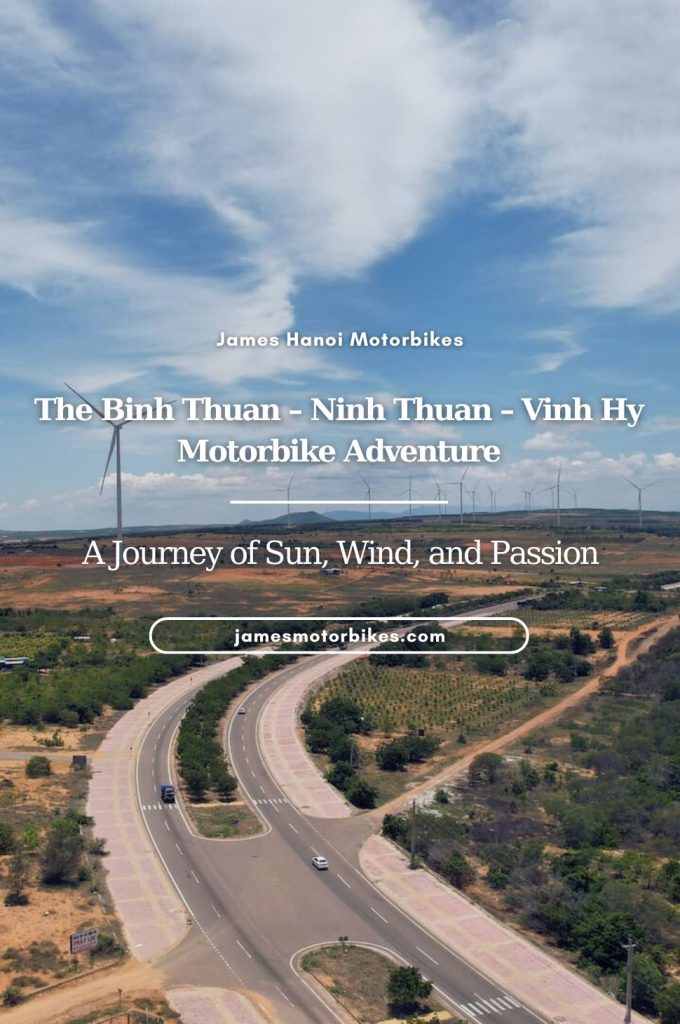
Binh Thuan has long been a familiar destination on Vietnam’s tourism map. People come here for the sunshine, the sea, the beachfront resorts, and the breezy coastal roads where the wind never seems to rest. But if that is all you see, you have only discovered half of Binh Thuan.
The other half lies in the coastal fishing villages — places with no fixed itineraries for visitors, no staged check-in spots, only the steady, unhurried and resilient rhythm of fishermen’s lives. Here, the sea is not just a landscape; it is a livelihood, a constant worry, and at the same time, the hope of an entire community.
The journey through Mui Ne – La Gi – Tuy Phong is a journey from tourist crossroads to purely maritime villages, revealing a simple truth: some places are beautiful not because they are dazzling, but because they are real.
1. Mui Ne Fishing Village – A Quiet Rhythm Behind the Lights of Tourism
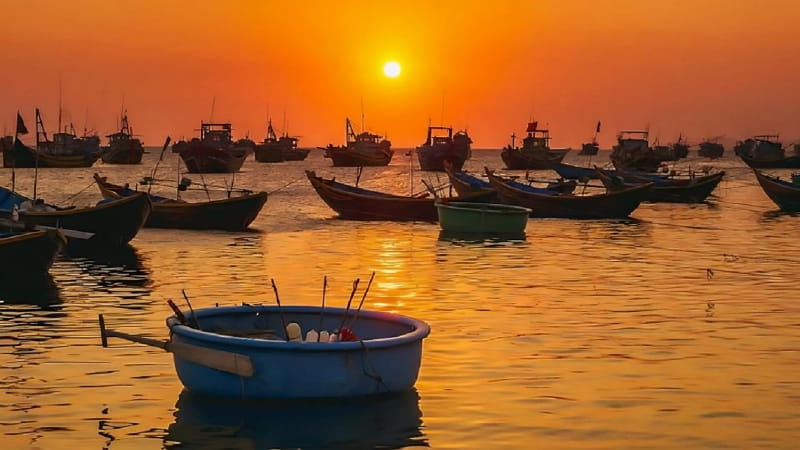
When Mui Ne is mentioned, many people immediately think of resorts, beautiful beaches, and lively seaside hotels. But just a few hundred meters off the main road, a very different Mui Ne reveals itself: a small fishing village where basket boats, fishing nets, and low houses facing the sea continue to exist quietly alongside modern tourism. The two worlds sit close to each other, yet their rhythms of life are completely different.
An early morning in Mui Ne fishing village
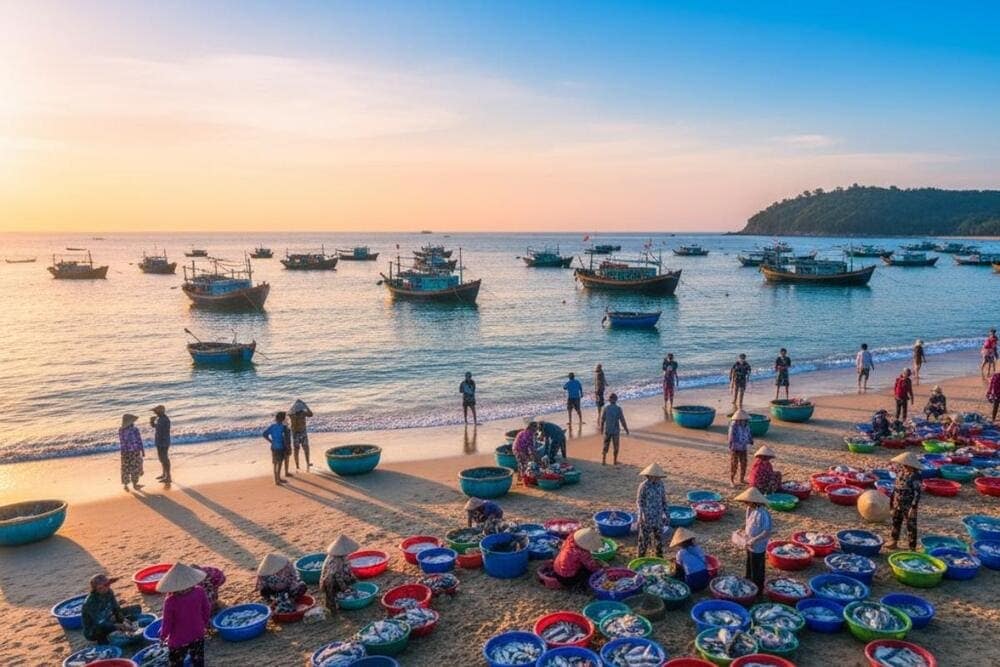
Around 4–5 a.m., while most visitors are still asleep, the fishing village is already awake. Along the shoreline, yellow lights reflect on the wet sand as boats return one by one from offshore. Anchovies, round scad, sardines, squid, and shrimp are brought onto the beach. The work flows steadily: pulling boats ashore, untangling nets, sorting the catch, and selling it right there on the sand.
There is no noise, no aggressive selling. Buyers and sellers exchange just a few words — familiar faces who have known each other for years. The fish sells quickly because it is fresh and in season. For fishermen, a calm morning, gentle seas, and a steady catch already mean a day that feels complete.
Living alongside tourism without being swept away
What makes Mui Ne fishing village so valuable is that its residents have managed to preserve their own rhythm of life, even as tourism has grown rapidly around them. They are open to conversation and willing to sell fish to visitors, but they do not “perform” or turn their daily lives into something staged for viewing. The fishing village remains a place to live, not a display.
Here, one learns how to move forward with change without losing one’s roots.

Local Dishes in Mui Ne Fishing Village
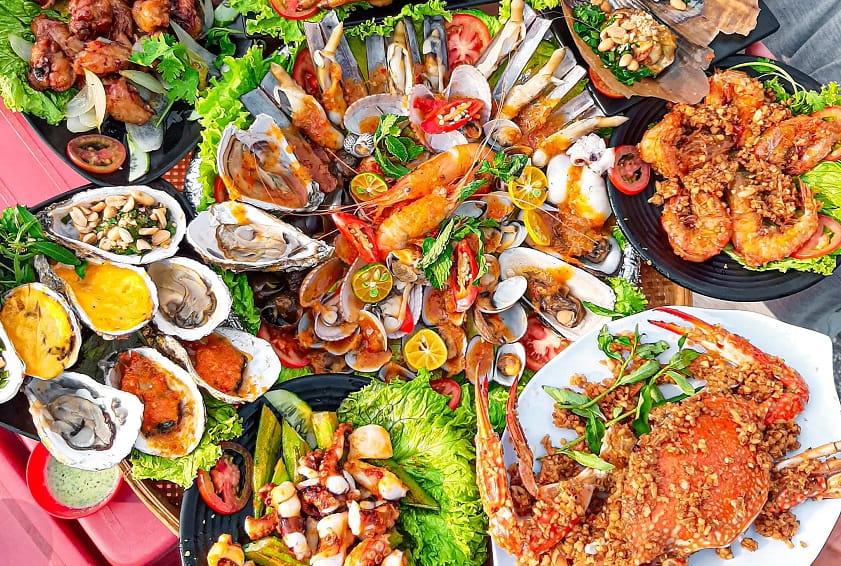
The cuisine of Mui Ne fishing village is closely tied to the rhythm of early mornings by the sea. The best dishes are usually made from seafood that has just come ashore, prepared with minimal seasoning to preserve the salty taste of the ocean and the simple, honest spirit of the villagers.
- Grilled or lightly braised round scad and sardines
Seasonal fresh fish with firm, naturally sweet flesh. Locals often grill them over charcoal or braise them lightly, serving them with hot rice and boiled vegetables. - Fresh squid and sun-dried squid (one-sun squid)
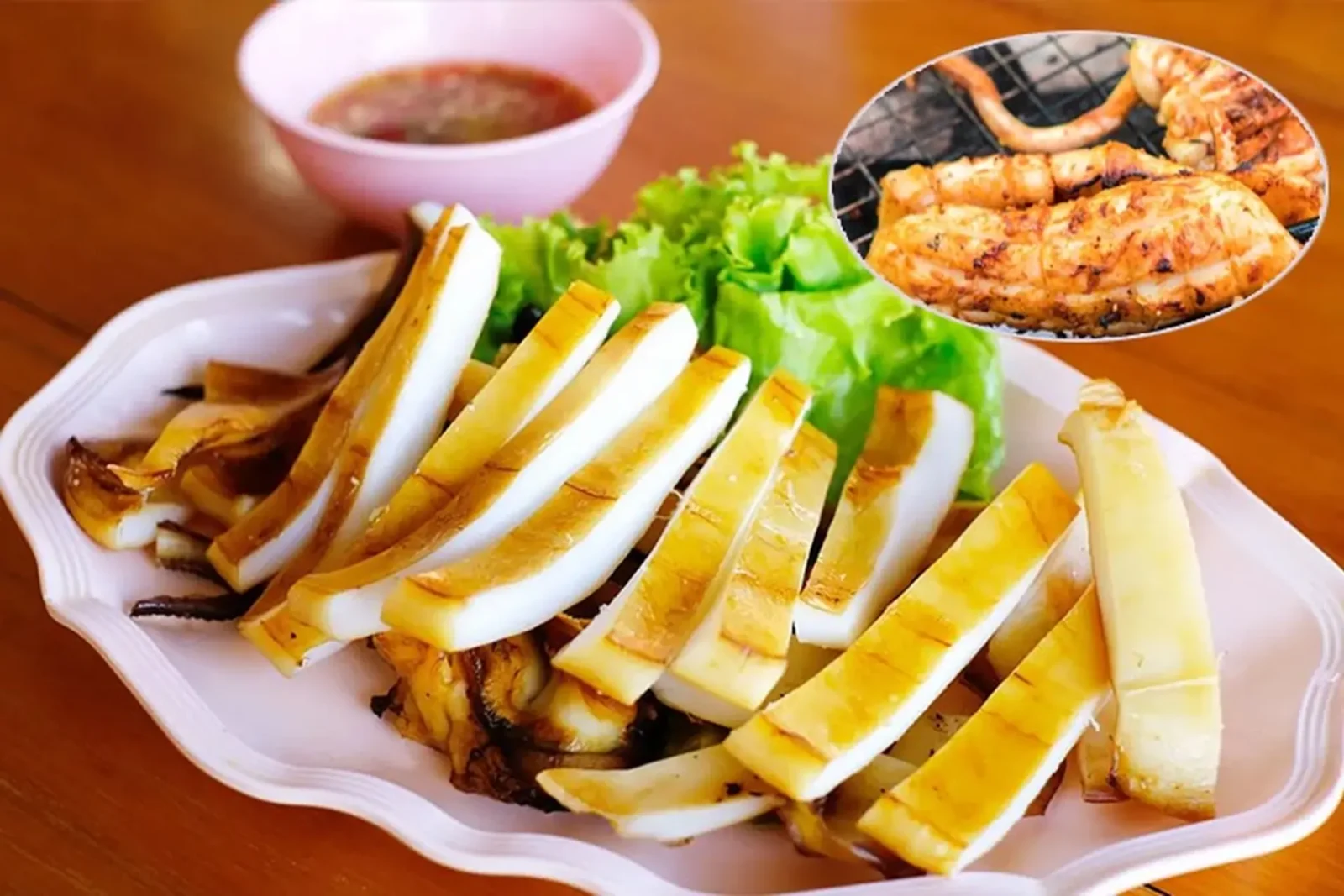
Squid is dried under the sea sun for just one round, leaving it soft and thick. When grilled, it releases a distinct aroma; a dip of chili salt with lime is all it needs. - Sardine salad (Gỏi cá trích)
Fresh sardines thinly sliced and mixed with herbs, rice paper, and a richly flavored dipping sauce. This is a familiar dish among Mui Ne’s coastal communities. - Simply steamed or grilled seafood
Shrimp, crabs, and sea fish are usually steamed or grilled without heavy seasoning. Enjoyed while still hot, they reveal their freshness and natural sweetness. - Traditional fish sauce
Made from fresh anchovies and fermented using traditional methods, the fish sauce is rich, aromatic, and indispensable in every fishing village meal.
The food of Mui Ne fishing village does not seek attention. It is delicious because it is fresh, seasonal, and enjoyed within the slow, steady rhythm of coastal life.
2. La Gi Fishing Village – Where the Sea Is Gentle and Life Is Enough
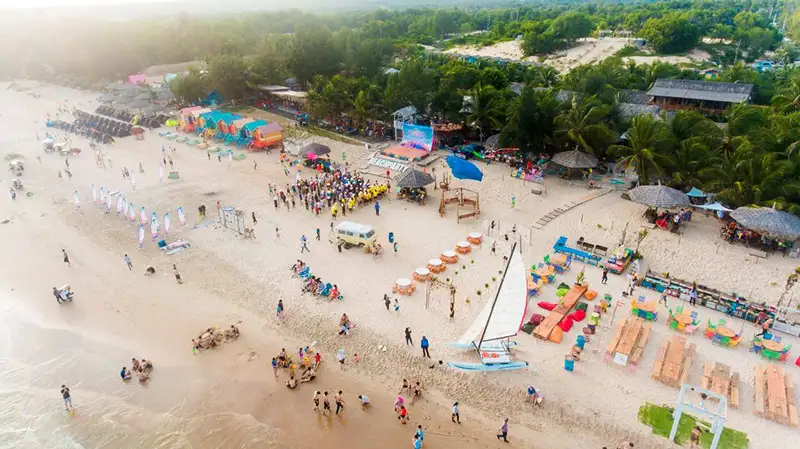
La Gi is quiet and makes no effort to stand out as a tourist destination. Precisely because of that, its fishing villages have preserved a rare sense of authenticity: gentle seas, long beaches, moderate waves, and people who live slowly, simply, and with just enough. In La Gi, everything unfolds softly, in tune with the breathing rhythm of the sea itself.
A rhythm of life deeply rooted in community
Fishermen in La Gi mostly work close to shore. They have known one another for generations — whose boat is whose, whose nets are whose, which seasons are favorable and which are difficult. Each trip to sea is not only a family’s livelihood, but a shared concern of the entire village. When the sea turns rough, everyone worries together. When the catch is abundant, the joy spreads evenly.
In the morning, fish are brought to small seaside markets. Buying and selling happens calmly, with little bargaining, because everyone understands the effort behind a return from the sea. By midday, the fishing village quiets down. As the sun rises high, the boats rest, and so do the people — a way of life that follows nature, unforced and unhurried.
A fishing village to “stay,” not just to visit
La Gi does not offer many pre-arranged experiences for tourists. But if you stay long enough, you gradually blend into the local way of life: eating meals on time, taking midday naps with the sun overhead, sitting in front of the house in the afternoon breeze from the sea. There is no need for an itinerary, no need to “see it all” — simply staying still already feels sufficient.
Local dishes in La Gi fishing village
The best food in La Gi fishing village is not found in restaurants or elaborate presentations, but in fishermen’s family meals — where everything is balanced, unexcessive, and filled with the scent of the sea.
- Braised croaker fish in fish sauce
Fresh croaker braised with fish sauce, pepper, and chili. Savory and aromatic, this dish pairs perfectly with hot rice, especially on days when the sea is rough. - Sour fish soup with mackerel scad
Made from fresh sea fish, lightly sour from tamarind or local sour fruits, with tomatoes and herbs. It is refreshing and easy to eat after a long morning at sea. - Fermented fish sauce with fresh vegetables
Handmade fermented fish sauce with a gentle aroma, eaten with boiled or fresh vegetables and plain rice. A familiar dish in many fishing village households. - Sun-dried fish and squid
Seafood dried directly under the coastal sun, preserving its natural salinity. Grilled dried fish or dried squid dipped in chili salt is a distinctive local snack. - Simply steamed or grilled seafood
Shrimp, crabs, and sea fish are usually steamed or grilled with minimal seasoning. Best enjoyed while still hot, straight from the stove in the early morning.
La Gi’s fishing village cuisine is neither elaborate nor showy. Each dish carries a sense of warmth, sufficiency, and closeness — mirroring the quiet, humble life of the people who live by the sea.
3. Tuy Phong Fishing Village – Strong Winds Shape Resilient People
Tuy Phong is one of the windiest coastal areas in Binh Thuan, with harsh sunlight and powerful waves. These severe natural conditions have not made the fishing village barren or lifeless. Instead, they have shaped a very distinct beauty—orderly, sturdy, and resilient through the years. The sea in Tuy Phong does not cater to people, and the people here are not accustomed to living carelessly.
A fierce sea, unhurried people
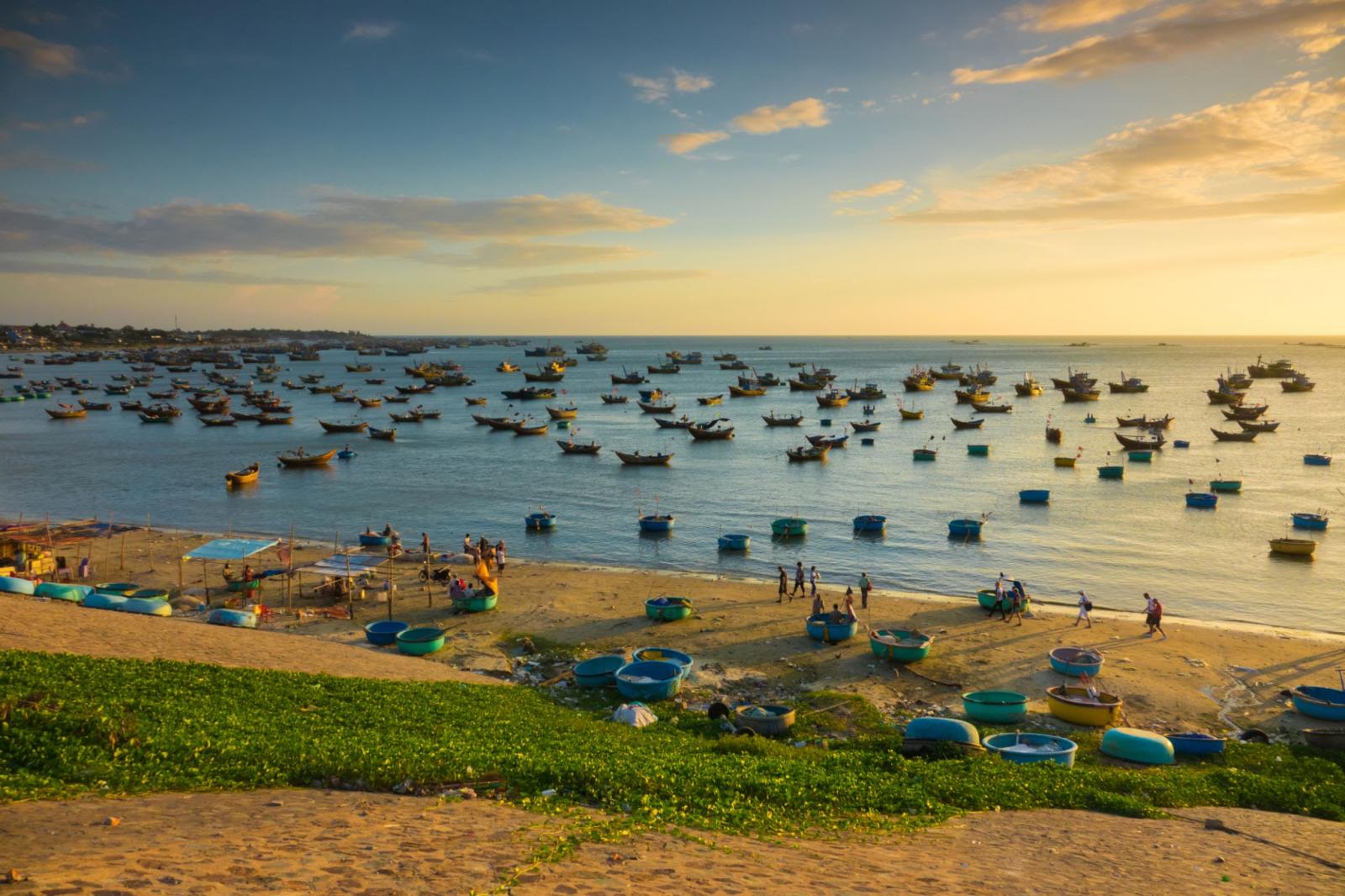
Fishermen in Tuy Phong are used to living with risk. Boats are always firmly anchored, fishing nets carefully spread across the shore, and every movement is deliberate and well-organized. In these waters, even a small mistake can come at a high cost, so carefulness is not a choice—it is instinct.
People in Tuy Phong are not talkative, but they say what needs to be said. They do not complain about the rough sea, nor do they talk much about distant voyages. To them, the sea is simply part of life: sometimes gentle, sometimes fierce. A person’s task is not to fight the sea, but to know when to go out—and when to stop.
A Culture of Endurance and Adaptation
If Mui Ne carries a sense of balance, and La Gi feels gentle and quietly abundant, then Tuy Phong most clearly embodies the spirit of endurance and adaptation found among coastal fishermen. Respect for nature is present in every small detail: the way houses are built to withstand strong winds, the way boats are anchored, and the careful timing chosen for each journey out to sea.
People in Tuy Phong understand that nature is not something to be conquered, but something to be listened to and lived alongside. It is this deep understanding that allows them to stand firm through seasons of relentless wind, harsh sunlight, and challenging fishing trips.
Tuy Phong is not noisy, nor does it try to attract attention. But if you stay long enough, it will teach you one clear lesson: resilience does not come from brute strength, but from knowing how to live slowly, live steadily, and live in harmony with nature.
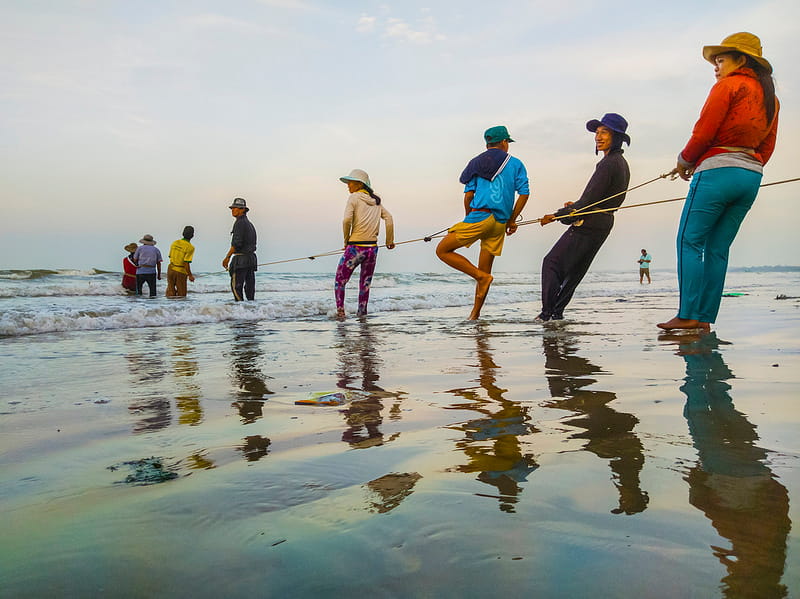
Local Delicacies of Tuy Phong Fishing Villages
The cuisine of Tuy Phong fishing villages bears the clear imprint of a land shaped by strong winds and harsh sunlight. The food here is not elaborate, but its flavors are bold, firm, and straightforward—much like the people who have spent their lives alongside a restless sea.
- Fresh anchovies and dried anchovies
Anchovies are caught in abundance and used for soups, braised dishes, or dried under the sun and wind. Dried anchovies from Tuy Phong are well known for their natural wind-drying process, resulting in a fragrant taste with just the right level of saltiness. - Grilled round scad and Indian mackerel
Fresh sea fish are grilled directly over charcoal with little seasoning. Once cooked, the flesh is firm and aromatic, best enjoyed dipped in salt and chili for a complete, honest flavor. - Dried squid and one-sun-dried squid
Squid dried in the sun and wind of Tuy Phong has a chewy texture and a rich natural sweetness. When grilled, it releases a distinctive aroma unique to this windy coastal region. - Traditional fish sauce
Tuy Phong fish sauce is made from anchovies and aged for a long time. It has a strong aroma but a deep, lingering flavor, and is considered the soul of many local dishes. - Simply grilled or steamed seafood
Shrimp, fish, and squid are usually just grilled or steamed, then eaten hot right after cooking to preserve the pure taste of the sea.
The food of Tuy Phong fishing villages needs little introduction. Bold in flavor, firm in texture, and honest in character—just like the lives of the people living at the edge of the wind.
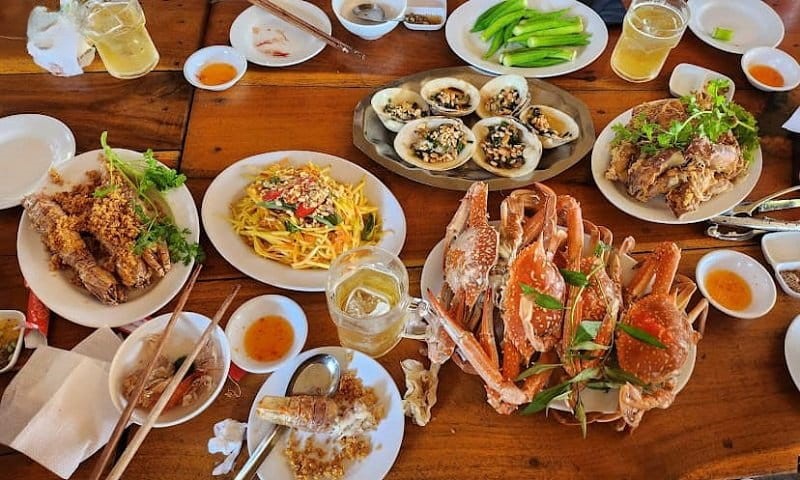
Fishing Village Travel – A Different Way of Going
Fishing village tourism in Bình Thuận is not for the hurried traveler. It is a choice for those who want to slow down in order to go deeper:
-
To understand the lives of fishermen, not just observe the surface
-
To listen and feel, rather than constantly chase photos
-
To bring home genuine emotions, not just a few souvenirs
A gentle, quiet way of traveling—yet one that stays in your memory for a very long time.
Notes for Visiting Fishing Villages
-
Wake up early to fully experience the rhythm of daily livelihood when fishing boats return to shore.
-
Always ask for permission before taking photos of local people, especially the elderly and children.
-
Keep the area clean: do not litter and avoid making loud noises that disturb daily life.
-
Respect the living and working spaces of the fishing community; avoid excessive curiosity or invading privacy.
-
When buying seafood or local products, communicate politely and bargain moderately, so the exchange remains comfortable for both sides.
When visiting fishing villages, the more thoughtful and respectful you are, the richer and more lasting the experience will be.
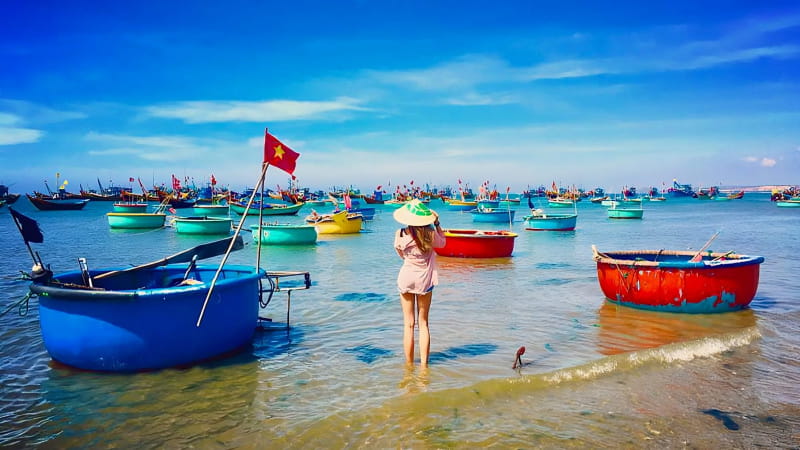
Conclusion – Bình Thuận, a Place to Learn How to Slow Down
The fishing villages of Bình Thuận do not try to become noisy or glamorous destinations. They simply live quietly, in rhythm with the sea, the windy seasons, and each morning’s catch. And it is precisely this calm, unforced way of life that lingers so long in the memory of those who pass through.
In a world that is always rushing forward, Bình Thuận reminds us that some journeys do not need to be far, nor filled with countless check-in spots. Sometimes, all it takes is slowing down a little, looking a little closer, listening a little deeper—to touch real life, real people, and, in the end, to reconnect with ourselves.
Contact Us
- Address: Number 449 – Hong Ha street | Phuc Tan, Hoan Kiem District, Hanoi
- Hotline: +84 915 010 817
- Email: jameshanoimotorbikes@gmail.com
- Facebook: facebook.com/jameshanoimotorbikes